Friday, June 27, 2025
Real Farmer Review: Jagdish Prashad Grows Healthier Cucumbers with Effective Use of Nutrients
Tuesday, May 27, 2025
How a Farmer from Rajasthan Solved His Cucumber Problem – Must-Watch Story
Sanjay Chaudhry, a farmer from Sikar, Rajasthan, was facing a common issue in cucumber farming – fruit dropping and low yield. Like many farmers, he tried different methods, but nothing seemed to work well.
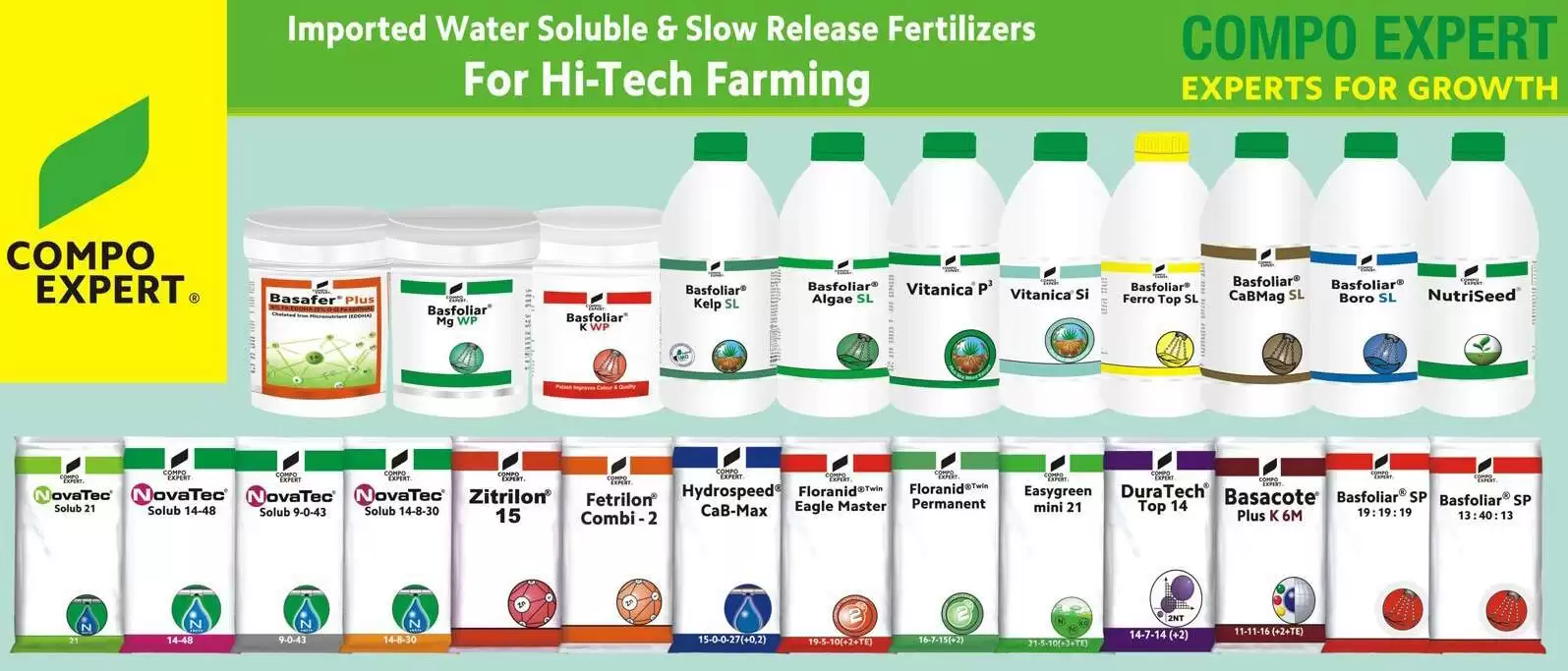
Then he came across a range of imported agricultural products from Compo Expert, available at Agricare Corporation. After using them, Sanjay noticed a big change in his farm:
-
The dropping of cucumber fruits stopped
-
The plant growth improved
-
The yield increased significantly
-
Fruits became healthier and better in quality
-
Water and nutrients were used more effectively
His success story is now inspiring many farmers across India.
👉 Watch the full story here: https://youtu.be/VEVvLepkC1k
If you are also facing similar problems in your farm, this video can help.
Wednesday, March 20, 2024
Understanding the Essentials: NPK Fertilizer
In the world of agriculture and gardening, the term NPK fertilizer is frequently mentioned, often accompanied by numbers representing different ratios. But what exactly is NPK fertilizer, and why is it crucial for plant growth? Let's delve into the basics and explore why this trio of nutrients is essential for cultivating healthy, thriving plants.
NPK
stands for nitrogen (N), phosphorus (P), and potassium (K), which are three
vital elements necessary for plant growth. Each of these nutrients plays a
unique role in various aspects of a plant's development:
1.
Nitrogen
(N): Nitrogen is crucial for the formation of amino acids, proteins, and
chlorophyll, all of which are essential for plant growth and photosynthesis. It
promotes lush, green foliage and overall plant vigor. Nitrogen deficiency often
results in stunted growth, yellowing leaves, and poor fruit or flower
production.
2.
Phosphorus
(P): Phosphorus is involved in several key processes within plants, including
root development, flowering, and fruiting. It aids in energy transfer and the
formation of DNA and RNA. Phosphorus deficiency can lead to weak root systems,
delayed maturity, and poor seed or fruit production.
3.
Potassium
(K): Potassium helps regulate various physiological processes in plants, such
as water uptake, photosynthesis, and enzyme activation. It contributes to
disease resistance, stress tolerance, and overall plant health. Potassium
deficiency may manifest as weak stems, leaf scorching, and susceptibility to
pests and diseases.
The
numbers displayed on NPK fertilizer labels represent the percentage of each
nutrient in the product, in the order of nitrogen-phosphorus-potassium. For
example, a fertilizer labeled as 10-10-10 contains 10% nitrogen, 10%
phosphorus, and 10% potassium by weight.
Choosing
the right NPK ratio depends on the specific needs of the plants being grown and
the stage of growth. For instance, a high-nitrogen fertilizer (such as
20-10-10) is suitable for promoting vegetative growth in leafy greens and
grasses. In contrast, a balanced fertilizer (like 10-10-10) is suitable for
general-purpose use on a variety of plants. Fertilizers with higher phosphorus
(e.g., 5-10-5) are ideal for encouraging flowering and fruiting in plants.
However,
it's essential to use NPK fertilizers judiciously, as excessive application can
lead to nutrient imbalances, environmental pollution, and harm to beneficial
soil organisms. Soil testing can help determine nutrient deficiencies and guide
fertilizer application rates.
In
summary, NPK fertilizer is a cornerstone
of plant nutrition, providing essential nutrients needed for healthy growth and
development. Understanding the roles of nitrogen, phosphorus, and potassium and
their respective ratios empowers gardeners and farmers to make informed decisions,
resulting in vibrant, productive plants and bountiful harvests.
Saturday, February 10, 2024
Nurturing the Earth: The Impact of Soil Conditioners on Agricultural Growth
In the quest for sustainable and productive agriculture, soil conditioners emerge as unsung heroes, playing a crucial role in enhancing soil health and promoting robust plant growth. These often-overlooked amendments are instrumental in transforming ordinary soil into a fertile foundation for thriving crops.
Soil
conditioners are substances added to soil to improve its physical, chemical,
and biological properties. They address various soil issues, including
compaction, nutrient deficiency, and poor water retention. One of the primary
benefits of these conditioners is their ability to break down compacted soil,
creating a more porous structure that allows roots to penetrate easily and
access essential nutrients.
The
enrichment of soil fertility is a key aspect of soil conditioners. These
amendments enhance nutrient availability by improving soil structure, enabling
better absorption of essential elements by plant roots. This nutrient boost
translates into healthier plants, increased yields, and improved overall crop
quality.
Water
retention is another critical factor influenced by soil conditioners. In
regions facing water scarcity, these amendments help soil retain moisture,
reducing the frequency and volume of irrigation needed. This not only conserves
water but also contributes to sustainable agricultural practices by optimizing
resource utilization.
Furthermore,
soil conditioners contribute to the biological diversity of the soil. They
promote the growth of beneficial microorganisms that aid in nutrient cycling
and pest control. This microbial activity creates a harmonious ecosystem within
the soil, fostering an environment conducive to plant growth and resilience.
Organic
and synthetic soil conditioner offers options for
farmers based on their preferences and specific agricultural needs. Organic
alternatives, such as compost and manure, contribute to soil health in a
natural and sustainable manner. Synthetic conditioners, on the other hand, are
engineered for specific soil deficiencies and provide targeted solutions.
As
the global demand for food continues to rise, the role of soil conditioners in
sustainable agriculture becomes increasingly vital. By investing in the health
of the soil, farmers can ensure long-term productivity, reduce environmental
impact, and contribute to a more resilient and sustainable food supply chain.
In essence, soil conditioners pave the way for a greener, healthier planet, one
enriched soil at a time.
Friday, January 19, 2024
Nourishing Growth: Unveiling the Power of Liquid Fertilizers for Lush Gardens
In the ever-evolving realm of gardening, where every bloom tells a unique story of care and dedication, liquid fertilizers emerge as the unsung heroes, transforming ordinary soil into a nutrient-rich haven for plants. This blog delves into the fascinating world of liquid fertilizers, unlocking the secrets behind their effectiveness and exploring the myriad benefits they bring to gardens of all sizes.
Liquid fertilizers, often hailed as the elixir for plants, come in various formulations, each tailored to meet specific nutritional needs. From nitrogen-rich solutions fueling robust leaf development to phosphorous-packed concoctions promoting sturdy root systems, and potassium-infused blends enhancing overall resilience, these liquid wonders offer a customizable approach to plant care.
What sets liquid fertilizers apart is their rapid absorption rate. Unlike traditional granular fertilizers that require time to break down and release nutrients, liquids are quick to permeate the soil, delivering an instant boost to hungry plants. This immediacy proves invaluable, especially during critical growth stages or when plants exhibit signs of nutrient deficiency.
The versatility of liquid fertilizers extends beyond the garden bed. Suitable for both outdoor and indoor plants, they provide a convenient solution for urban gardeners, offering a mess-free application and ensuring precise nutrient delivery. Their compatibility with various irrigation systems further streamlines the fertilization process, making it accessible to gardeners of all skill levels.
This blog will guide readers through the application of liquid fertilizers, offering insights into proper dosage, frequency, and timing for optimal results. From promoting vibrant flower displays to increasing fruit yields, liquid fertilizers act as catalysts for a garden's full potential.
Additionally, the environmental impact of liquid fertilizers will be explored, showcasing eco-friendly formulations that prioritize sustainability without compromising efficacy. With a focus on responsible gardening practices, this blog aims to empower readers to make informed choices that benefit both their plants and the planet.
Join us on a journey through the liquid fertilizer landscape, where science meets nature, and the essence of nurturing growth is unlocked in every drop. Discover the transformative power that lies within these liquid gems and witness your garden flourish like never before.
Saturday, May 20, 2023
An overview of the varied uses for fogging machine
It is crucial to keep our homes and workplaces clean. However, it can be difficult to thoroughly clean and disinfect medium- to large-sized surfaces while also eradicating the viruses and bacteria that are reproducing in secret locations.
If all you have is a disinfectant spray bottle and a towel, you'll probably miss a lot of places where the coronavirus or other dangerous pathogens could be hiding. One of the most efficient tools for sterilizing medium and large regions is a portable fogging machine.
A little device called a fogging machine sprays liquid into the air after it has been aerosolized.
Dry fog and moist fog machines are the two main categories of fogging equipment.
Dry fog sanitizing machines use a hydrogen peroxide-based sterilant/disinfectant. On the other hand, wet disinfection fogging machines frequently use a hydrogen peroxide or chlorine dioxide-based solution for decontamination. A specific hydrogen peroxide-based product is used by some devices. Other industries that use fogging equipment include environmental, medicinal, and more. These are only a few of their applications.
What use do fogging machines serve?
When vast areas need to be cleaned and disinfected, fogging machines are widely utilized in a variety of industries. The most common applications for fogging machine are given below.
Hospitals:
For decades, hospitals and medical equipment have been cleaned and sterilized utilizing disinfection fogging machines. Hospital fogging machines clean and sanitize the abandoned wards and rooms in addition to decontaminating reusable medical equipment.
Hospital fogging equipment is commonly utilized and operates quickly. Equipment and surfaces that have been treated can be used again practically immediately.
Food sector:
When sanitation is a top priority, foggers can be used both indoors and outside in a variety of contexts in farming and the food processing industry. Particularly important are the chemical-based thermal fogger devices in settings like dairy, meat, and poultry hatcheries. Additionally, fogging equipment is crucial for sanitizing high-risk food processing facilities that demand a high standard of cleanliness.
Insect control:
The control of insects is becoming a bigger problem both inside and outside. As a result of climate change, we are currently contending with a wider variety of unwanted creatures. Machines that produce cold fog are employed to destroy these insects.
Wednesday, February 23, 2022
Find Essential Plant Nutrient Online for Your Garden
Planning to plant your own garden? You need to have the idea about plant nutrient no matter you are gardener, farmer, and horticulturist. Usually, plants require different 17 essential elements for normal growth. When carbon and oxygen are obtained from the air, other nutrients must be gained from the soil or growing media.
They are
categorized in two different parts such as Macronutrients and Micronutrients. Macronutrients
are basically utilized in large quantities by the plants to grow. It includes
Nitrogen, Phosphorus, Potassium, Magnesium, Calcium, and Sulfur. Sometimes, it
is necessary to add fertilizers and nutrients to the water to offer the plant
with these nutrients. There are many gardeners and farmers are using plant nutrient for plant growth.
There are two
groups of Macronutrients. Nitrogen, Phosphorus, and Potassium are the primary
nutrients and Calcium, Magnesium, and Sulfur are the secondary nutrients.
When we talk
about Micronutrients, they are involved in small amounts. It includes Boron,
Copper, Iron, Chloride, Manganese, Molybdenum, and Zinc. They also play a major
role for plant growth and survive.
In addition, the
soil must have a good condition and must have the proper pH and texture. Soil
is the best medium for water, allows drainage, and houses bacteria and other
living organisms.
Moreover, proper
plant nutrition is essential for plants' healthy growth. You can find a wide
range of nutrients and supplements to choose from. You can choose plant
nutrients as per your exact needs and specifications. Do not go with
synthesized chemicals that will harm your plants as well as the environment,
when you have natural and organic products to use.
Find a reliable
and reputed supplier online that can meet your needs and budget. Take your time
and get the best value to your money.
Real Farmer Review: Jagdish Prashad Grows Healthier Cucumbers with Effective Use of Nutrients
Author: Team Agricare Growing cucumbers can be tough, particularly for farmers who experience fruit drop, pest infestation and poor yield. B...
-
In the ever-evolving realm of gardening, where every bloom tells a unique story of care and dedication, liquid fertilizers emerge as the uns...
-
You might have used a fungicide, herbicide, or insecticide on a plant in order to roll off the plant leaves. If you are fond of gardening ...
-
It is crucial to keep our homes and workplaces clean. However, it can be difficult to thoroughly clean and disinfect medium- to large-size...